
EMF-ECBC calls for pan-EU mortgage guarantee scheme
The European Mortgage Federation-European Covered Bond Council has called for a “28th regime” mortgage guarantee scheme as part of a package of measures it argues would support the bloc’s broader economic and political targets, and further integration of mortgage markets.
 The EMF-ECBC initiative comes in the wake of the December launch of a European affordable housing plan by the European Commission, which was itself the culmination of a year of work, with the EMF-ECBC having earlier, in May 2025, published a concept note that its new strategy expands on.
Central to the industry body’s proposals is a 28th regime mortgage guarantee scheme, which would build on the experience of successful public-private national guarantee schemes in countries including France, Greece, Italy, the Netherlands and Romania. As a so-called 28th regime measure, it would complement rather than replace or subsume the national activities, and operate as a scaled-up pan-EU scheme.
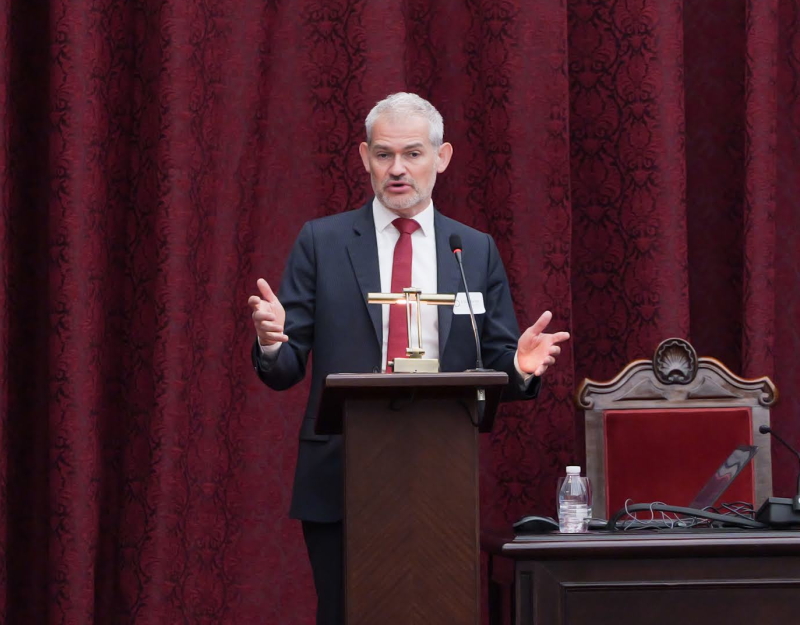
“This strategic pathway sets out a vision for strengthening the competitiveness of the EU Single Market by advancing toward a more harmonised European mortgage framework,” said Luca Bertalot, EMF-ECBC secretary general (pictured), announcing the proposals on 27 March.
“At its core is the proposal for a European ‘28th regime’ mortgage guarantee – an initiative designed to improve access to homeownership, enhance financial stability and mobilise private capital, all while respecting the fiscal constraints faced by many Member States.”
As well as directly making mortgages more accessible and housing more affordable for citizens, such a guarantee scheme could promote energy efficiency measures, Bertalot told The CBR, with the Energy Efficient Mortgage Label the EMF-ECBC has promoted potentially being required for eligibility, for example.
The industry body said a scheme could be implemented through a dedicated fund established by the European Investment Bank (EIB) within the framework of the European Housing Platform, and provide a first demand guarantee on a portion of mortgage loans.
“For specific categories of borrowers, such as young people, low-income households, single parents or elderly borrowers, the level of the guarantee could be increased subject to clearly defined criteria and conditions applicable at EU level,” said the EMF-ECBC. “The guarantee would cover the bank’s credit risk and not the borrower’s repayment obligations.
“As a result, banks participating in the scheme would be able to lend with lower risk exposure, and reduce both capital requirements and execution risk.
Further measures in the EMF-ECBC’s package include interventions in the European implementation of Basel III, notably:
Making the transitional arrangements in Article 465(5) of the Capital Requirements Regulation (CRR) permanent at the current level of the Output Floor for residential mortgage exposures that meet the low-risk criteria;
Reassessing the necessity of introducing the Basel III prudent value (CRR property value) in Article 229 CRR as a new concept of value in the calculation of capital requirements, instead of the long-standing and well-established concepts of market value and mortgage lending value. The property value has not been adopted in other jurisdictions such as the UK and Switzerland, thereby exposing EU lenders to an uneven playing field in their lending business. [EMF-ECBC wording.]
The EMF-ECBC also said that a more harmonised European mortgage framework would improve the efficiency of capital markets funding, benefiting instruments such as covered bonds, securitisations and sustainable debt.
Bertalot said that such a European mortgage guarantee scheme and associated harmonisation and labelling could serve as an approach that could then be built on at a global level – an initiative it is working on with the International Secondary Mortgage Market Association (ISMMA).