
The German Sparkassen Pfandbrief Roundtable 2026
The red “S” is an increasingly recognised sign in not only Germany, but also the international capital markets, as the Sparkassen step up their syndicated issuance. Four such savings banks and sponsor NORD/LB joined our latest roundtable to discuss how they are tackling the Pfandbrief market, ESG issues, and evolving business dynamics.
You can download a pdf version of the roundtable here.
Participants in the roundtable, which was held on 9 April:
• Christoph Anhamm, MD, DCM Origination, NORD/LB
• Anton Fuchs, Treasury/Banking Book and Funding, Berliner Sparkasse
• Katja Karstaedt, Treasury/Liquidity Management and Funding, Sparkasse Bremen
• Christian Schaefer, Director Institutional clients/Trading/Treasury, Kreissparkasse Köln
• Andrej Schiebler, Treasury/Head of Banking Book and Funding, Berliner Sparkasse
• Giancosimo Walter, Treasury, Sparkasse Dortmund
• Neil Day, Managing Editor and moderator, The Covered Bond Report
Neil Day, The Covered Bond Report: Christoph, perhaps you can kind of set the scene a bit. What are the overarching and key characteristics of the savings banks sector that you would highlight?
Christoph Anhamm, NORD/LB: To start with, it’s worth noting that the concept of savings banks is about 200 years old. And ever since then, it has spread across the country, meaning there are savings banks in every single village, county and city — currently, we have something like 383 different savings banks in Germany. That’s about 20% less than 15 years ago, which is a sign of the consolidation underway in the sector. Nationwide, there are roughly 6,700 branches and 4,000 self-service points, again, less than 15 years ago, and another sign of cost efficiency and consolidation.
One of the main characteristics of this group is actually its coherent depositor protection system, of which not only the savings banks themselves are members, but also the Landesbanken and the Landesbausparkassen, so it’s a widespread system. It has always proven to work well in the event of a crisis of a particular savings bank, and in the case of Landesbanks.
In terms of market share, the savings banks have about 30% of the retail market in Germany, and also around 30% of the residential housing market. In terms of money transfers, the savings bank sector has a market share of about 40%-45%, which indicates how important the sector is for retailers, as well as for SMEs and smaller sized companies.
And then regarding today’s main topic, about 40 different savings banks have a licence to issue Pfandbriefe. Of the 10 largest, six are already frequent issuers of larger sized transactions, meaning sub-benchmarks and benchmarks.
Day, The CBR: And then turning to the individual issuers, what would you each highlight that is distinctive about your particular institution, for example, the ownership structure, regional activity, credit profile?
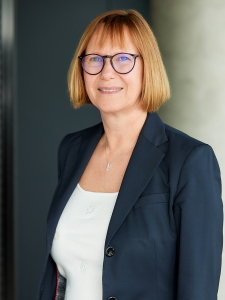
Katja Karstaedt, Sparkasse Bremen (pictured): We are one of the few savings banks that operates as a public limited company. We were founded 200 years ago by citizens for citizens of the city of Bremen, in the form of an economic association. In 2004, the economic association was converted into a holding company, whose sole asset is Die Sparkasse Bremen AG.
 Special in the composition of our administrative board is that it consists predominantly of Bremen businesspeople and no politicians. So we have more economic competence than political authority in our administrative board to manage our Sparkasse.
We are a savings bank in a city state, so we are particularly committed to the residents of the city of Bremen and the immediate region around Bremen. That’s reflected in our credit profile. Our loans are residential in nature, and like our corporate lending business, firmly rooted in our region, Bremen and the surrounding area.
We are also deeply rooted in our local community. That’s reflected in our social commitment in over 600 institutions in our city.
Lastly, a feature of our savings bank is that we are working with very flat hierarchies, because we are a network organisation.
Christian Schaefer, Kreissparkasse Köln: As the name suggests, we are based in Cologne. Our headquarters is right in the centre of the city, at Neumarkt. However, the name is somewhat misleading, because our sponsoring public entities are the four counties surrounding the cities of Cologne and Bonn. In fact, the name derives from the former Landkreis Köln, an administrative area that existed until 1975 and was then dissolved as part of a territorial reform, comprising parts of Cologne and what is today the Rhein-Erft-Kreis. That is why we also offer our services in the city, still maintaining three branches, but this area is actually the core business territory of Sparkasse KölnBonn. That is the historical and structural context that explains why there are two savings banks with the name Köln in it, both operating in and out of Cologne.
But accordingly, we focus on the economically strong surrounding region of these two cities, where people have a higher disposable income than the rest of North Rhine-Westphalia, and our business area is larger than the island of Mallorca.
Last year we surpassed the €30bn balance sheet threshold, and therefore the next step is the transition to the direct supervision of the ECB and the SRB in the coming year.
That’s pretty much us in a nutshell.
Giancosimo Walter, Sparkasse Dortmund: Sparkasse Dortmund is located in the Ruhr Valley, which is a very densely populated region in Germany. It was in the past famous for the steel and coal industry, but we underwent some structural changes, so the industry is not that strong here anymore. Here in Dortmund, the area evolved into one with more service-oriented industry, logistics and more technology, which made the regional economy less dependent on a single industry. We as Sparkasse Dortmund also supported this structural change, e. g. the technology park here in Dortmund to foster start-ups, which also helped to sustain jobs in other areas.
Sparkasse Dortmund operates in Dortmund, but in 2022 merged with the Stadtsparkasse Schwerte. Schwerte is a city of around 50,000 people right next to Dortmund — Dortmund has a population of around 600,000. We are now operating only under the name of Sparkasse Dortmund.
Anton Fuchs, Berliner Sparkasse: First of all, our ownership differs from that of other German savings banks. As Berliner Sparkasse, we are part of the German Savings Banks Finance Group (Deutscher Sparkassen- und Giroverband, DSGV), and also the joint liability scheme that was mentioned earlier — in that respect, we are no different to the other savings banks. However, we are the only savings bank that is fully owned by all the other savings banks in Germany. This also means that our supervisory board includes board members from other savings banks, i.e. banking professionals, and — as mentioned earlier regarding Sparkasse Bremen — this provides additional expertise and stronger governance.
BSK 1818 AG is the sponsor and originator of Berliner Sparkasse. We have this for legal reasons. We use BSK 1818 AG to issue securities and we conduct our main client business through Berliner Sparkasse, the brand of our company established in Berlin.
Day, The CBR: That’s different to when you participated in last year’s roundtable.
Andrej Schiebler, Berliner Sparkasse: Indeed, we changed our name last year. The name of our sponsor and originator was until July 2025 Landesbank Berlin AG. The new name that we have chosen is BSK 1818 AG, which reflects the name of Berliner Sparkasse and the year in which it was established. With this change, we have left behind our history as a larger Landesbank in the early 2000s.
Day, The CBR: Christoph, how might some of the features the issuers have highlighted affect the way the savings banks are positioned in the market, vis-à-vis each other and also other Pfandbrief-issuing banks?
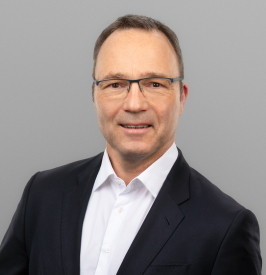
Anhamm, NORD/LB (pictured): Besides the different ownership structures, each and every savings bank is characterised by the economic structure of the region in which it is active, the main industries and businesses of the region, and also by the main competitors it faces locally, which could be other regional banks, commercial banks, or, to some extent, also Landesbanks.
 Savings banks’ regional nature is one feature investors can focus on. They don’t have to look at the whole of Germany; if they like, for instance, Munich, but not Frankfurt, they can buy one and not the other. So they can take a view in that respect based on their opinion of one region or another.
What is generally true of the savings banks and noteworthy is that on average they have a lower share of commercial real estate assets in their cover pools. It varies, of course, from bank to bank, but for non-savings bank issuers, CRE exposure in cover pools is on average 28%, whereas for savings banks, the average is about 10%. It varies between around 5% up to a maximum of something in the mid-30s, but looking at the main issuers today, it is around 10%-15%. A key criticism of Pfandbrief issuers, particularly from foreign investors, is that they often have too high a share of CRE exposure, and the savings banks can respond to that in a positive way, given the low proportion of it in their cover pools.
You can argue that the frequency of issuance by savings banks, due to their size, isn’t as high as that of the larger banks, which is sometimes seen as a less positive aspect by investors, and also that sub-benchmarks might not be as liquid as benchmarks — but I believe we will discuss those topics more later on.
Day, The CBR: Christoph, you already referred to how many of the top savings banks are active in sub-benchmarks and benchmarks. How has such issuance developed?
Anhamm, NORD/LB: This is a sector characterised by significant growth rates. In 2023, savings banks issued just three larger sized transactions, meaning sub-benchmarks and benchmarks. In contrast, last year, we had 11. In the old days, we had two or three savings banks being active. Now we have 10. And that number is probably increasing: we are quite positive about at least one more issuer that yet hasn’t issued a sub-benchmark or benchmark coming to the market with one this year, and then there are another one or two in the pipeline, probably for 2027. So this is an ongoing growth story.
The overall amount issued so far this year is just three transactions totalling €1bn, all of which came in February. That is less than the four deals seen in the equivalent period last year, but, for whatever reason, savings bank are typically more active issuance-wise in the second part of the year than the first. This could be because they gain a better idea of their exact funding needs as the year develops, since savings banks are typically very well-funded through deposits, and so whatever arises in terms of new business, for example, may determine any additional funding needs.
Day, The CBR: How has your issuance developed?
Fuchs, Berliner Sparkasse: Starting with last year, 2025 was another successful year in market funding for us. We issued two syndicated sub-benchmarks. The first, in January, was a €250m public sector Pfandbrief with a tenor of five years. The second, in October, was a €300m seven year mortgage Pfandbrief. Both transactions were very successful. We had strong participation from Germany, including typical German investors, bank treasuries and savings banks, which is very important to us. We also saw a high proportion of official institutions, as well as some demand from abroad, which was noteworthy.
This year, we haven’t yet issued a syndicated Pfandbrief. We are a regular issuer of covered bonds, with 12 sub-benchmarks outstanding. We also aim to issue at least one syndicated sub-benchmark Pfandbrief this year, too, but this will be later in the year.
We kicked off 2026 by issuing 11 senior preferred and senior non-preferred private placements. We have clear MREL targets and timelines for achieving them, so it made sense for us to start with senior funding already in the first quarter. Senior markets were very favourable at that time, so it was logical for us to start with senior and then do the covered later. The timing depends on broader considerations, and our January issue last year shows that it is not typical for us to issue later in the year.
 Walter, Sparkasse Dortmund (pictured): We have been active on the public market since 2024, so we’re relatively young in comparison to some other savings bank issuers in this roundtable. Our last issuance was in March 2025 and it was very successful. Like Berlin, the backbone of our investors are the German ones, also from the savings bank sector. But we were very happy about the interest from foreign investors, with 30% of demand coming non-German accounts, from all across Europe, also from the Nordics — I think the investor marketing was very successful in this area.
We typically want to issue such bonds every 12 to 18 months — we are only focused on mortgage covered bonds. We are planning to issue one bond this year — so there could be something coming soon.
Schaefer, KSK Köln: 2025 was our comeback year in the capital markets. Early in the year, we returned after a prolonged absence, as the first German savings bank issuer of a Green Pfandbrief in sub-benchmark format. At the same time, this transaction represents the first Green Pfandbrief issued by a savings bank that is backed exclusively by retail mortgage loans, i.e. traditional owner-occupied residential housing finance. This issuance was voted best sub-benchmark deal of the year by GlobalCapital in Seville last September. This means that we more than achieved our objectives for 2025.
Looking ahead, as I said before, having now become the first municipal savings bank in Germany to surpass a balance sheet volume of €30bn, we expect to maintain our regular presence in the capital markets going forward, to support our future growth trajectory. It’s highly likely that we will return to the capital markets again this year, but with a conventional sub-benchmark issuance.
Karstaedt, Sparkasse Bremen: We issued our second sub-benchmark Pfandbrief in October 2025. We are also relatively new in this market, as our first sub-benchmark issue was in 2024. We wanted to enter the capital market with a sub-benchmark Pfandbrief to enhance our refinancing strategy.
We are quite happy with our experience so far. Last year we had only a short time to plan our issuance, but we achieved distribution of around 90% in Germany and 10% in other countries, and reached new investors. That was very good for our refinancing plans.
For 2026, our focus is to continue the expansion of our cover pool, because we want to continue to issue in the capital market in the near future. We are currently working very intensively to issue also a Green Pfandbrief, although a smaller one, not in sub-benchmark format. We have already completed the framework and the second party opinion. We wouldn’t expect to issue another sub-benchmark Pfandbrief until at least 2027 to cover our refinancing need in addition to our healthy customer deposits.
Day, The CBR: Christian, what was the rationale for KSK Köln returning to sub-benchmark Pfandbrief issuance?
Schaefer, KSK Köln: Our last previous sub-benchmark had been in 2016. The reason we stopped being a regular issuer was that we had a lot of retail funding coming in. This started right after the euro crisis and accelerated during Covid, so there was no need to go to the capital markets.
But in 2018 we started collecting energy performance certificates and so generated a huge green cover pool, and last year we thought it was time to tap into this potential and issue a comeback covered bond in green format. Given our current growth trajectory, we want to maintain this issuance. It will not always be in green format — this year, as I said, we will have a traditional sub-benchmark, but maybe green the following year.
Day, The CBR: Christoph, you touched on the pros and cons of benchmarks versus sub-benchmarks earlier. What are the key considerations here? And how can we expect the sector to develop in this regard?
Anhamm, NORD/LB: One of the key characteristics of savings banks issuance, as mentioned, is that aside from the larger institutions, issuance is typically every 12 to 18 months or thereabouts. That’s why not all the 10 active banks are out every single year — there may be six this year, or eight next year, for example. This is due to the fact that they simply have limited balance sheet sizes — large, but limited, due to their excellent access to the retail market via deposits and term deposits. At the same time, they want to diversify their investor base away from that typically reached via private placements, into a broader investor base in the institutional sector, as well as other savings banks as investors or other second tier investors, and clearly foreign accounts.
The big and perennial question then is whether to issue a benchmark or a sub-benchmark. In this regard, it’s worth bearing in mind individual balance sheet sizes and what it then means for an institution to issue a €500m transaction. If your balance sheet is €7bn, €8bn or €10bn, that would mean having a very significant proportion of your balance sheet redeeming at a single point of time. It could therefore be preferable from a banking perspective, let alone a regulatory perspective, to issue sub-benchmarks — which in itself may already be a big step. By issuing sub-benchmarks every 12-18 months, you can then build up a nice maturity profile. That’s the strategy most of the savings banks are currently employing. There are only a very limited number, two or three, issuing benchmark-sized transactions — and from what I’ve heard and seen, it will remain that way. So for the time being, the savings bank sector will probably continue to be dominated by the sub-benchmark issuance strategy.
Walter, Sparkasse Dortmund: Sparkassen are indeed bound by their limited balance sheet sizes.
Previously, we only issued private placements with just a few investors — this was, I would say, a manual job: you didn’t really know who may be interested in your covered bonds. We then moved to the sub-benchmarks, where we reached 50-60 investors with our issuance, so this was a really big step for us. For sure, there would be positives if we took the next step and issued a benchmark, and this would be possible for Sparkasse Dortmund, but this would not be very sustainable, because our cover pool is limited for this size. We want to build a curve and to be respected by investors as a frequent issuer. They now know that we will come every 12-18 months and can mark in their calendar that we will be issuing next year — this is our main goal. As well as being an issuer, we are an investor ourselves and we know what we appreciate from other issuers, and we want to be a reliable issuer in that sense.
Day, The CBR: In Berlin, you have been the stalwart of the sub-benchmark market for many years. What are the pros and cons versus benchmark issuance, and is there any prospect of you changing tack?
 Schiebler, Berliner Sparkasse (pictured): This is a question we are often asked. First of all, it is well known that, as an issuer, we really love the sub-benchmark segment. Since 2014, we’ve been focused on the sub-benchmark segment, and we have consistently implemented a sub-benchmark strategy over a whole decade. The benefit for us is that we have a well-diversified liability structure. The most important thing for a savings bank is always customer deposits. Our customer deposits provide a very reliable and cost-effective source of funding and reduce our reliance on capital markets. This stability enables us to pursue strategic opportunities within the sub-benchmark segment, while mitigating the risks associated with market volatility. Leveraging customer deposits allows us to maintain a balanced approach to funding, with complementary sub-benchmarks, supporting our sustainable growth. So, if you ask us about benchmarks, we generally would not rule out a benchmark issuance, because we have a €7bn cover pool for mortgage Pfandbriefe. However, this would only be the case if we had a very strong loan business, or if customer deposit growth lost momentum. At the moment, neither of these scenarios is foreseeable. But the cover pool itself would be large enough to support a benchmark issue.
Schaefer, KSK Köln: The Sparkassen Pfandbrief sub-benchmark sector continues to gain recognition, with a number of issuers having effectively opened the door to additional issuers within the space. So I believe the segment has found its place in the capital markets.
As a major savings bank, we hold €6bn of untapped cover pool capacity, which clearly demonstrates our ability to launch a benchmark transaction. But we would then have this sizeable maturity concentration, which would pose a challenge for liquidity management, and particularly in regards to maintaining sufficient liquid overcollateralisation within the cover pool for the segment. So all these considerations have to be carefully weighed up against each other. Nonetheless, we currently feel very comfortable with the sub-benchmark format.
Karstaedt, Sparkasse Bremen: Like the others, we, too, love the sub-benchmark format as it is easy to manage in terms of the maturity structure and liquidity management. Also, like Dortmund, we want to build a curve. Taking the size of our cover pool into account, too, we likely will not issue a benchmark covered bond.
Day, The CBR: What has been your experience with investor marketing so far, in general and with respect to international accounts? Is there a correlation between your efforts and demand?
Karstaedt, Sparkasse Bremen: I imagine it is similar to the activities of our peers, our marketing activities have mostly been targeted at German investors. For example, we hold roadshow and roundtables with our Landesbanken, such as NORD/LB, to present Sparkasse Bremen. That helps us to arouse interest among investors beyond those that we saw in the past when we issued Namenspfandbriefe. And we are currently launching our international marketing efforts.
Walter, Sparkasse Dortmund: We have done some international investor marketing. However, we also profit from the Sparkasse brand, because so many savings banks are doing investor marketing, also with international investors, and they therefore recognise the brand and know it better. They understand that while every savings bank is different, they also have a lot in common, and that their cover pools are mainly residential, and they are solid investments. So while we are doing marketing for ourselves, it is also to the benefit of all savings banks.
We use the different channels: in person, digital, or in print, as with this roundtable. So it’s constant marketing, not just right before a transaction — we try to do our marketing all year-round, whenever investors are interested in information about us. That’s our experience.
Fuchs, Berliner Sparkasse: Our core market is clearly Germany. However, there are other European countries with a strong covered bond investor base that are of interest to us. In 2024, we relaunched our international investor marketing activities. Since then, we have visited Austria, Finland, Belgium and Luxembourg. Like the other savings banks, our aim is to diversify our investor base, and we are delighted to welcome new buy-and-hold investors from the EU, particularly those we have had the opportunity to meet in person. Diversifying our investor base is crucial for mitigating risk associated with relying on a single market, and engaging with a wider range of investors ensures the long-term sustainability and resilience of our financial strategies. It’s difficult to measure the effectiveness of individual marketing activities, whether domestic or international. However, we believe there’s a positive correlation between these activities and investor demand.
 Schaefer, KSK Köln (pictured): We recently resumed our international marketing activities, and, of course, our core area is still Germany. After such a long absence from the market, many investors now have free credit lines for us. And a green Pfandbrief in particular proved highly marketable internationally, especially in the Nordics, even without a traditional roadshow. We believe this issuance will serve as a door-opener for us for future transactions. And as said before, the growing recognition of the Sparkassen Pfandbrief products, along with the underlying business model of financing private residential real estate, resonates very well with conservative investors here and abroad.
Anhamm, NORD/LB: The simple fact is that Germany has the largest investor base for covered bonds. So for a German institution to have German investors as its largest investor constituency is the most natural thing in the world. Almost every jurisdiction in the covered bond market has a very strong domestic bias — countries such as Australia, New Zealand and Canada are exceptions. French investors buy more of a French covered bond than a German covered bond. The same goes for the Spanish, the Dutch, the Scandis or whoever. So there is a natural bias, which we can easily live with, and which is a great advantage for our institutions.
At the same time, there is indeed an increase in international marketing. Currently, for a savings bank transaction, between, say, 70% and 80% goes to Germany. This would be an unusually high percentage for some other German issuers. Nevertheless, for savings banks, it reflects increasing distribution to international investors, most prominently to the Nordics, which on average account for something between 10% and 15% of allocations. This means, firstly, that we have been successful as a sector in marketing the concept up there, and secondly, that these investors clearly understand the concept of the Savings Banks Finance Group, as well as the advantages the banks provide, be it from the cover pool perspective or be it with their regional strengths.
Adding to our earlier discussion of benchmarks versus sub-benchmarks, what we understand from investors is that they rather prefer somebody who comes out every 12 to 18 months with a sub-benchmark, than somebody that comes out every three years with a benchmark. So frequency is indeed an important consideration: you need to give credit risk management a reason to look into the lines of individual issuers — should you come every year or so, then it makes sense for me to look at you; if you only come every three years, I may think twice about it.
Additionally, the recognition of the red “S” for savings banks is definitely increasing. It is going international. There is greater awareness of this particular sector, and we are strong believers in that whole strategy being even more successful going forward. We probably won’t reach the stage where, say, less than 50% is placed with Germany. At the same time, every single investor we get outside this country increases diversification, and thereby increases the access of German issuers for not necessarily only Pfandbriefe, but also other products.
Day, The CBR: Some savings banks are working with triple-ratings for their Pfandbriefe, others a double-A rating. What are the explanations for and implications of this? Can we expect all savings banks to switch to a triple-A approach?
Karstaedt, Sparkasse Bremen: Spar-kasse Bremen Pfandbriefe are not triple-A rated, but AA+ by Fitch. At the start of the rating process, we did not have sufficient time to collect all the necessary data to achieve a AAA rating from Fitch. We decided that double-A+ would be enough, and we saw oversubscription of four and five times in our last issues, so indeed the rating was not a problem — nor for the pricing: although we started with guidance wider than triple-A rated Pfandbriefe, we were able to tighten in 7 bp in 2024 and 6bp in 2025.
Nevertheless, we are weighing up the costs and the benefits involved in doing the work necessary to gain a rating based on comprehensive data, and we may get it this year, I hope.
Fuchs, Berliner Sparkasse (pictured): We have a triple-A rating for our Pfandbriefe here in Berlin. We began issuing covered bonds after German reunification, in the early 1990s, and since 2004 our Pfandbriefe have been rated triple-A. This comes in addition to the extensive documentation and strict asset controls, as mentioned earlier.
 The triple-A rating is helpful when it comes to pricing — some investors care about a triple-A rating. However, investors also pay attention to the quality and overcollateralization of the cover pool. In our case, this means clearly focusing on our core market of Berlin-Brandenburg, only including performing loans in the cover pool, having a very transparent cover pool without any derivatives, and having overcollateralization of €4bn in our mortgage cover pool.
Schiebler, Berliner Sparkasse: So, while triple-A is indeed important, and a positive factor, but there’s more to it than just the rating.
Schaefer, KSK Köln: We have a Aaa Moody’s rating for our Pfandbriefe and a Aa3 issuer rating. From our perspective, a triple-A rating is essential, especially if you’re issuing in sub-benchmark format, because if you want to reach the LCR classification of 2A, you need a good rating. Moreover, if you want to address a broader investor base alongside this LCR eligibility, a triple-A rating is a prerequisite. Whether a double-A rating is sufficient is ultimately the decision of each savings bank in the context of their own funding strategy. And as a rule, the syndicate will play a key role in determining how good is the placement potential, and if a triple-A or double-A rating is needed.
Walter, Sparkasse Dortmund: We think that the triple-A rating is a quality label in itself. It’s widely known and maybe needs less explanation than a AA+ — some investors are not familiar with why these ratings may differ. On the pricing side, some say it makes a difference — sometimes you maybe see it, sometimes you don’t. I think this may be a question for Christoph. But at Sparkasse Dortmund, we said, OK, we are fairly new to the market, we don’t want to have to explain our rating, but just show investors we have a very good cover pool, with all the added extras cited by Berlin, and this is why we went for the triple-A, and we would do it again if faced with the question.
Anhamm, NORD/LB: If everybody had the choice and it were that easy, everybody would offer triple-A Pfandbriefe. But we have to bear in mind, as was already mentioned, that it requires quite a bit of data, and data management internally that not every institution necessarily has, be that because of its size, the availability of staff, or cost sensitivities. So depending on these and their needs, institutions may or may not go for triple-A. The trend is indeed probably towards triple-A, based on what we have just heard and also what we are hearing across the industry. However, there are good reasons to go for double-A in particular if you opt for a Fitch rating, because it is relatively easy to achieve AA+ due to the underlying rating of the Savings Banks Finance Group, as such. With the same amount of data and work, you could probably also achieve triple-A from Scope, but investors are principally focused on the major three, with Moody’s and Fitch apparently being the ones people currently opt for.
Does this have an impact on pricing? Well, pricing is determined by so many different factors that it’s hard to determine whether a notch difference in rating is a significant driving factor. There is also, for instance, the frequency of issuance, the composition of the cover pool, the size of the issue and its implications for liquidity and LCR recognition, and the different profiles of the issuers in the market — the combination of all those will determine pricing, so it’s very hard to say that an individual component is responsible for 0.5bp-1bp one way or the other — and to my understanding, there is no statistical evidence on the actual impact of any of these individual factors.
We also have to note — with due recognition to the vdp — that the Pfandbrief itself is a brand name, very well known internationally. So simply saying that you are a German Pfandbrief issuer gives you a certain credit among international as well as domestic investors, and puts a ceiling on your spread.
Day, The CBR: Turning to ESG matters, Christian, you’ve already spoken a little about how the EPCs contributed to your green bond initiative. Can you tell us more about KSK Köln’s broader strategy on this front?
Schaefer, KSK Köln: Sustainability has always played an important role across all our business areas. As a result, we’ve been awarded a sustainability rating of prime status with ISS since 2016. Our above-average ESG commitment was also a key factor in the second party opinion for our green bond.
This commitment did not result in a big greenium for us when issuing the green bond, but it led to a broader investor base, which was reflected in the oversubscription of the issuance.
Day, The CBR: Katja, you mentioned that Sparkasse Bremen is planning a Green Pfandbrief. What was the catalyst for this?
Karstaedt, Sparkasse Bremen: We also maintain an ESG rating from ISS with prime status since 2022. We have reflected ESG considerations via our sustainability strategy, and strictly implement and monitor them in our own investments. It’s very important to us — it’s in our DNA. That is our main driver to issue a green bond. The main challenge for us at the moment is the quality of the data, because not only is it important for us to issue a green bond, but the reporting afterwards must be of high quality. So that involves a lot of work. But we are endeavouring to achieve this and hope to be able to issue our green bond in 2026.
Day, The CBR: How is ESG reflected in your activities in Berlin and Dortmund? And what are your thoughts on green, social and sustainable bond issuance?
Schiebler, Berliner Sparkasse: Concerning the overall ESG performance of BSK, I would highly recommend taking a look at our externally-audited sustainability report, which is CSRD-compliant, and available online.
In terms of funding and the market as a whole, we have seen that ESG issuance from banks actually fell last year. There were lots of issuances from sovereigns and sub-sovereigns, but reduced activity from banks. One possible reason for this is that major players have already reached their critical mass in terms of assets, and this is resulting in a stagnation of new credit business. We have also observed that international investors are not paying as much attention to ESG as they did in the previous years.
But although we see international headwind for ESG, our aim is to introduce an ESG product on the funding side, too. This could enhance our reputation as a sustainable and forward-thinking company. If you look at our business model, then you will see that we have a sufficient pool of loans that qualify as green or social. We are working on this, and we are ready to take action in the near future. But there is nothing final that we can announce yet.
Walter, Sparkasse Dortmund: The Sparkassen themselves are bound by their public service mandate, so they can be considered to be quite strong on the social side. In this regard, all the savings banks invest heavily in their region, helping our customers to, for example, get more energy efficient housing and so on — where other banks maybe leave them behind, we support them. That’s one part of our ESG approach.
When it comes to social and green bonds, mainly because we lack the data, and therefore we don’t aim to issue such bonds in the near future. This can change at some time, but there would be this issue of data to tackle first.
Day, The CBR: Christoph, what is your perspective on the dynamics in green, social and sustainable bond issuance from banks? Balanced against the headwinds we have heard mentioned, we have seen positive developments such as the first covered bond in EuGB format recently?
Anhamm, NORD/LB: What we observe is that — and Andrej already alluded to this — there is, to a certain extent, less of a focus on the particular characteristics of the bond itself. So if somebody issues a green bond or social bond or regular bond, that is still important, but not as important as it used to be, at least for the time being. What there is a greater focus on is the overall sustainability characteristics of the individual issuers. Do issuers follow certain policies? How do they run their business?
In this regard, it is quite important to underline what our colleagues at the savings banks have already said about the sustainability approach of the sector. There is a commitment by the DSGV concerning sustainability and ESG that many savings banks have signed. This includes, for instance: a commitment to trying to achieve the Paris Climate Agreement, as well as the 17 UN SDGs; a commitment to systematically reducing the CO2 emissions in their own operations to zero by 2035; alignment with climate or ESG objectives when it comes to financing, proprietary investments and risk management; as well as promoting climate protection by locally empowering their employees and supporting environmental development. So there are already a lot of ESG commitments across the savings bank sector, with individual institutions on taking their own actions on top of this. This is very important and definitely something we should promote further, to make sure that everybody understands the particular characteristics of the group when it comes to ESG topics — which is not necessarily just looking back on the 200 year history, but also what we aim for going forward, which is the same for the savings banks as well as the Landesbanken, the whole group.
Day, The CBR: Sticking with that forward-looking theme, but exploring other industry trends, firstly, artificial intelligence is hard to ignore in any sector these days. How is AI being integrated into the business policies of savings banks, and is it influencing your business strategies?
Schaefer, KSK Köln: Just a couple of weeks ago, in mid-March, Skipi, the Sparkassen KI Pilot, was introduced here at KSK Köln. Although it currently has some areas for growth, it is expected to soon enhance its ability to support searches across our internal sources, guidelines, intranet, and more. The focus is on supporting employees, not replacing them. At present, this doesn’t entail any change in the business model. If anything, one could consider that the objective of this support is to generate additional time for client-facing activities, particularly with the emphasis on preparing client meetings. Skipi’s capabilities are being continuously expanded. KSK Köln also offers its employees and managers a wide range of training opportunities, to ensure that Skipi can be optimally integrated into daily workflows and to provide the best possible support.
Walter, Sparkasse Dortmund: AI poses challenges, but it enables us to offer our customers simple tools to use, where a bank teller or other employee is not essential, and so creates additional time for the important questions of our customers. So it won’t change how we as savings banks work — we won’t be a digital bank, or digital-only bank. Of course, customers expect to be able to use some services online. But if you want to buy your home and you need advice, many people want to talk to a person who guides them and supports them. So AI is helping us to free up time for the really important parts of our work. I would also note that there are regulatory aspects attached.
Karstaedt, Sparkasse Bremen: It’s a similar story at Sparkasse Bremen. We use Copilot for many things. Our chief digital officer, Pranjal Kothari, is on our executive board, and he is responsible for strategic developments in the areas of digitalization, automation and AI. The most question for us is how we can use technological innovations to make processes more efficient for increased customer value. The customer is the most important person for us, and so we use AI to make the experience better for them.
Fuchs, Berliner Sparkasse: I would echo much of what has already been said. Artificial intelligence enables faster decision-making for us, and higher customer satisfaction. We also use the S-KI Pilot, which is frequently used in customer services. Interview preparation time has been reduced, giving colleagues more time to spend with customers. While this new technology promotes productivity, it does not change our business model as a savings bank.
Day, The CBR: It’s been noted how deposits are at the heart of savings banks’ models. Does demographic change and the increasing proportion of digital natives pose a risk to the customer base of savings banks? At home in the UK, my 21 year-old son has a Revolut account — although my mum has switched from a high street bank to a building society that isn’t closing its branches.
Schiebler, Berliner Sparkasse: It’s interesting to hear that your son has a Revolut account. My 19 year-old son has a savings bank account, and beside the award-winning savings bank app, he really likes savings banks’ ATMs and branches where he can speak to someone in person if he has any problems.
First of all, demographic change is a very important topic, and we have a kind of advantage here because our core business area is Berlin. It is the largest and most populous city in Germany, and we have experienced above-average GDP growth since 2005. Berlin is also an area that is growing. It is a vibrant city that attracts young people and innovative start-ups. We have excellent universities, which is one of the reasons why Berlin is a popular destination for young people. This is also reflected in its demographics: the average age in Berlin is 43 compared to 45 for Germany as a whole. That’s a solid foundation to build our business on.
Looking to the future, we believe that the future of banking is hybrid. We provide banking solutions for digital natives, and we support new digitalisation initiatives within the Savings Bank Financial Group. However, we also have 100 branches across the city for customers who prefer in-person service. We believe that being close to our customers is in savings banks’ DNA.
Karstaedt, Sparkasse Bremen: We pursue a dual strategy: on the one side, the digital natives, on the other side, customers who value a physical branch and support in financial services. Both of them are our customers in every way. Whatever our costumers’ preference, they can use both opinions at any time — visiting a branch or using the app, because the Sparkasse app is very easy to use. So for us, it’s exactly the same as Berlin — and I imagine Köln and Dortmund would share this stance.
Schaefer, KSK Köln: Indeed. Like many banks, we’ve observed a shift of younger people towards neo-banks. However, in our case, this remains limited. We still have a market share of around about 40% of customers below the age of 30. We positioned ourselves for digitally serving the younger generations, supported by the award-winning Sparkassen app that has been mentioned, and a wide range of straightforward digital access channels, enabling us to address those digital natives. It’s perhaps worth mentioning that the savings banks are in the near future starting a Sparkassen neo-broker, with very low transaction costs. We have also established a so-called “Team Finance”, where younger advisors engage with young customers on an equal footing. At least for the short term, such an approach mitigates the risk of ceding this business segment to other institutions.
Walter, Sparkasse Dortmund: It’s a question of infrastructure. We have the Sparkassen app, which for many years has been deemed the best banking app, so we serve digital natives with this. And straightforward services can be very well dealt with by apps and so on. But for major decisions that you take perhaps once in your life, you want to talk to a person — you need to trust somebody with your decisions, with their guidance — and this is something we can offer as a savings bank, that digital banks cannot offer. We, too, want to open a branch for the young, similar to what Köln is doing, where our young customers can talk to advisors who are about the same age as them, because sometimes savings banks have a bad image, with an old advisor who isn’t on the same wavelength and doesn’t know the needs of these younger customers. We want to mitigate this risk. So it’s a dual strategy, because we would want to want to keep both your mum and your son as customers.
Anhamm, NORD/LB: When it comes to this question of digital or neo-bank versus traditional banks, savings banks are one of the very few institutions who actually cover both, so the presence on the ground as well as being accessible online and via apps. And that approach is actually the best evidence of a really consistent ESG strategy, because it addresses the social aspect: everybody, irrespective of how accessible to you new technology is, can access their bank account. As I mentioned at the beginning, savings banks have 6,700 branches and 4,000 self-service points, which means roughly one point of contact for every 7,800 people in this country. And those services are accessible to people even if they don’t necessarily have the greatest understanding of technology.
And looking at anecdotal evidence, one of my elder kids is currently thinking about buying a house, and guess what? When it came to the financing, the first thing they said is that they have an appointment at the savings bank around the corner next week. They have only been with online banks their entire lifetime, and all of a sudden, when it comes to that point, they go to the local savings bank — and I think that’s the final opportunity for the bank to catch them and get them on board, and to get the deposits as well. So there is something behind this whole story that you can’t escape. The savings bank sector can serve customers when it comes to something a bit more sophisticated than having an online account with a bit of brokerage attached. That’s a very long term sustainable and thought-through approach.